~Sue Sellew, Secretary of the Sharon Historical Society
In this blog post, the author shares current activities the Sharon Historical Society are undertaking to make their collections accessible to the public.
In 2025, the Sharon Historical Society (SHS) was very fortunate to be selected by the Vermont Historical Society (VHS) to receive training as part of a “Cohort” of five historical societies: Bixby, Brookfield, Sharon, Thetford and Waterbury. VHS recognized the need and importance of small, volunteer run historical societies whose collections are often stored in historic structures, many without heat, and is providing us with training. This training is known as “Active Collections”.
The Sharon Historical Society’s mission has always been to collect the history of Sharon. Our collection has grown over the years, and one of the things we have learned is to deaccession items that do not support our mission. (A Deaccession Policy is part of the original SHS Bylaw and we have written a procedure to do it.) Another goal is to “Tier” the preservation of items in our collection so we spend our time and money on items that best tell the story of Sharon’s history. As a member of the Cohort group, we meet regularly to discuss common problems and help find solutions. We plan to keep our Cohort group active when this VHS grant ends.
Vermont Historical Society staff Eileen Corcoran and Hannah Kirkpatrick, who run the Activating 21st Century Local History project, wrote the article below about the 2025 Cohort project, of which Sharon Historical Society is a participant. The article ran in the September/October 2025 issue of Museum magazine.
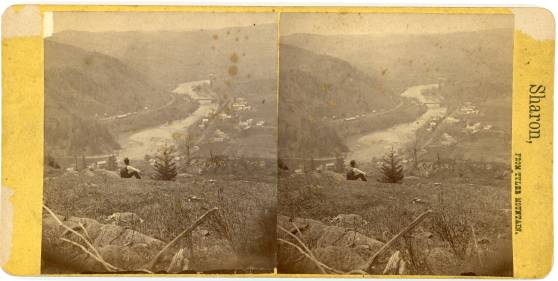
Vermont Views from Tyler Mountain 1870s; Sharon Historical Society.
We are looking for ways to engage the Sharon community. We have a collection of antique stereoscope cards with images of Sharon and are scanning them using equipment borrowed from the Vermont Historical Records Program (Mobile Digitization Unit). We plan to share these scans with the Sharon Elementary School and will discuss the images with their history classes.
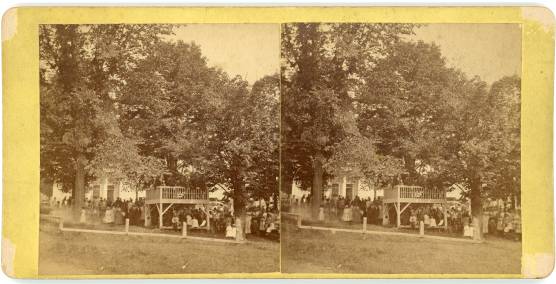
The Town of Sharon has the distinction of having the oldest, continuously held Old Home Day celebration in the country, and our collection includes many photographs taken over the decades. As they are scanned, we will add these images to a website that we hope to build this winter.
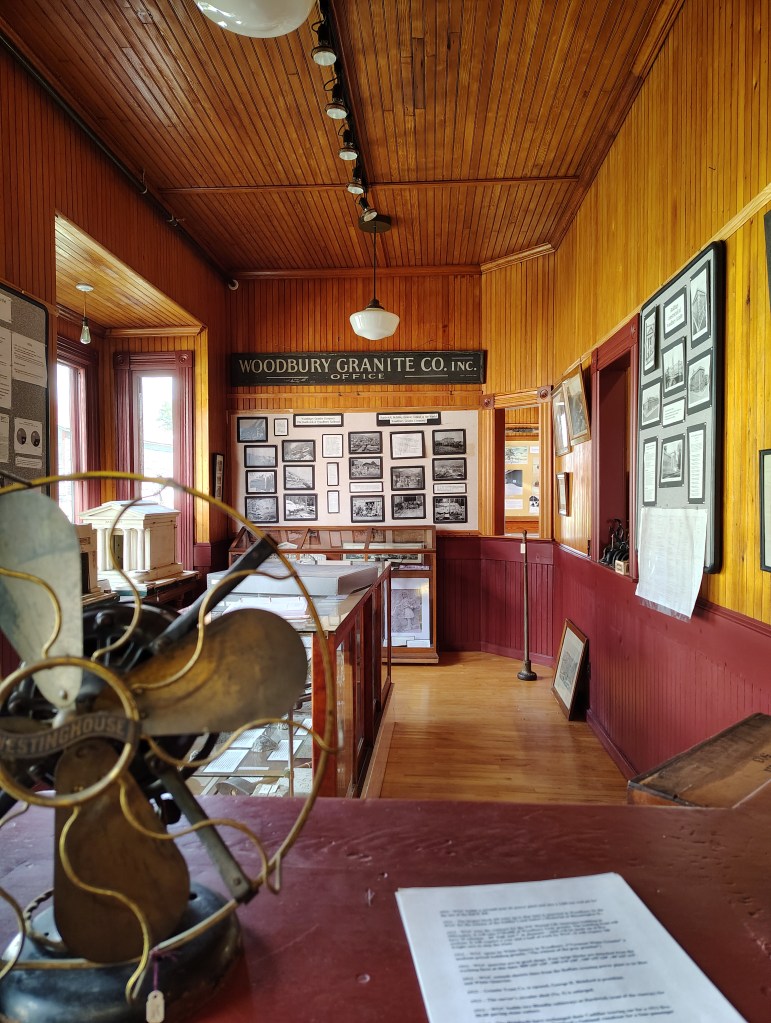
Hardwick Historical Society resides in the old Hardwick Train Depot along the Lamoille Rail Trail
~Elizabeth Dow, Hardwick Historical Society
A few years ago, the new owners of the Hardwick Gazette, our local newspaper, offered the Hardwick Historical Society the collection of 40 years of photographs, negatives, and contact sheets left in the office by the previous two owners. We immediately said yes, and it was a couple years before we did the math. Probably just as well. For 40 years, the paper had published 51 issues. Each issue contained at least 20 pictures–some many more. We could reasonably estimate that we had more than 41,000 images to process. Fortunately, the newspaper staff had filed each month’s pictures in a manilla envelop with the negatives and contact sheets.
Step 1: Identify the pictures and write the metadata on the back including: Hardwick Gazette, publication date, page, people, place, and/or event as described in the caption or story that accompanied the photo in the newspaper. For each pack of pictures we pulled the published newspaper, and turned pages, matching pictures, and writing the metadata on the back. We quickly made some decisions. For instance: no baby pictures from the “I’m One” column that ran for years; no glossy publicity shots for theatrical acts. Neither contains a lot of local historical information.
We identified pictures related to other towns, and then we put them in a container that we eventually sent to that town’s historical society. While we put the names of graduates or team members on the back of Hardwick pictures, we did not do that for the classes or teams from other towns. It simply took too much time.
This part of the project included as many as a half dozen volunteers working around a large table together, and it created a trip down memory lane that just never ended. A good time was had by all, until our hands began to cramp.
Step 2: File the pictures. Each picture went into a folder with others like it, and the folder went into a lateral file drawer. We developed a facetted index to organize the files. We could categorize a picture of a couple kids on a playground 1) by the kids’ names, 2) by the game they were playing, 3) by the playground 4) by the season of the year, etc. So we chose to file pictures by reason the photographer took the picture. If the photographer wanted to highlight the new playground equipment at the school, we filed the picture under “Schools–Hardwick Elementary–Playground, 1990-1999.” If the photographer meant to feature kids enjoying themselves during a summer activity, we filed the picture under that activity, e.g. “Recreation—Hardwick Summer Recreation Programs” or “Schools—Hazen Union—Sports—Basketball—Summer Program.”
We had some hitches. At first each newly engaged or married couple got its own folder. Then we saw how much drawer space that would take, and redid the folders by years and listed the couples in the index with the date of their engagement or wedding. And it took a while to sort out the difference between a sport and a recreation. Answer: “Sport” usually involves organized competition — e.g. basketball; “Recreation” usually does not — e.g. bicycling.
Shelburne Vermont has had at least two groups of citizens interested enough in the towns history to gather collections and create a museum space and hold events. These individuals however either passed away or were unable to continue. Large amounts of time and effort resulted in wonderful collections but with no centralized, permanent access, all their work was being dispersed and lost. The public does not know the importance of what they have in their possession.
In 2013, the 250th anniversary of the chartering of Shelburne saw the creation and focus of a large group of volunteers gathering written, oral and pictorial collections and presenting them during town celebrations. The resulting collections however were being moving around, with no centralized home due to renovations and new construction of the town offices and library. So at the end of the celebration, the initiative was taken to establish The Shelburne Historical Society, a legal non-profit.
At the completion of construction, the newly formed Society moved into the ‘old’ town clerk’s office complete with fireproof vault. The roving collections were moved in, think hoarders house, and every item was reviewed and put into topical folders. Collections management software systems were researched and a CatalogIt subscription purchased because it was very simple to understand and use, cloud based, and priced right for the budget.
Using money from a grant provided by the Lake Champlain Basin Program, archival shelving and storage materials were purchased, collection management education taken, procedures written for consistency, and then the topic folders one by one reviewed again, and recorded into the pictorial focused CatalogIt system.
The unique identifier assigned to each object during cataloging, provided a digital folder/file numbering system that allowed any data collected about that entry to be stored in a digital archive which is backed up weekly, monthly and annually in three different drives.
Having a collection is of little use unless there is easy public access and the CatalogIt HUB provides public access. However, it required access through a website platform, so a Google Space Website, free for qualifying non-profits, was created.
A monthly E-newsletter, utilizing the digital images and metadata being recorded, cutting/pasting was started to drive interest and build some ‘buzz’ about the new access to the town’s history.
Some of the gems we discovered during this process:
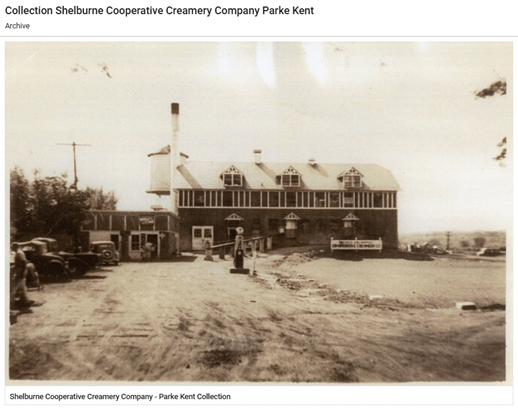
Diaries of Shelburne residents.10 years of Shelburne Cooperative Creamery Company business artifacts.Leander Chavin, town cobbler, accounting ledger with records from 1850-1854 including customers, work done, charges, and payments made including barters.A hand inscribed music book circa 1812.Oral and handwritten histories from town residents covering 1800’s to 1900’s.Images of building being relocated to the Shelburne Museum.
Best of all is the appreciation of Shelburne residents when they discover that someone is preserving the town’s history and providing a place for their donated collections. Gratitude that provides the incentive to continue the work.
Can a 1969 Cold Case be solved by materials found in an archive? Can a mysterious fatal fire from 1935, with diametrically opposed witness testimonies, finally be solved through old photographs found in an archive? Can today’s archival collections solve a lingering piece of a 1929 mysterious death? The answer in each case is “yes” or at least “maybe.” Amazing answers to old questions can often be solved when materials held in various public archives are studied by members of the general public.
Cold Case
Burlington Free Press
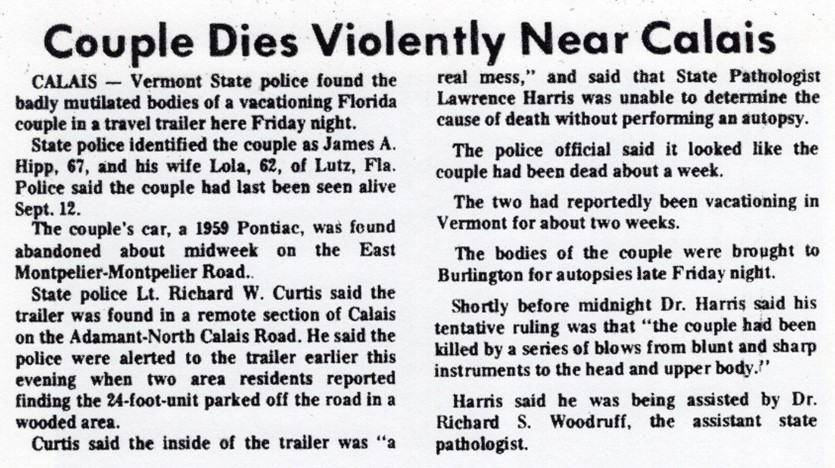
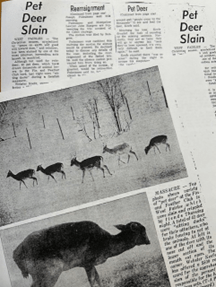
In 1969, James and Iola Hipp of Florida were murdered while vacationing in central Vermont and their case has never been solved. However, in the nearly six decades since that crime, a scrapbook of newspaper clippings maintained by an alleged loner was donated to the Vermont Historical Society after he passed away in 1987. At the very time of the killings, the scrapbook owner had begun saving newspaper clippings of homicides in central Vermont (there were several) that year. At the scene where the Hipp bodies were found, a slaughtered fawn was discovered. In his scrapbook, along with the stories of the homicides, the owner was also chillingly saving newspaper clippings of dead deer. He stopped collecting clippings when the cluster of homicides suddenly ceased. Coincidence?
The Times Argus
Civilian Conservation Corps Disaster
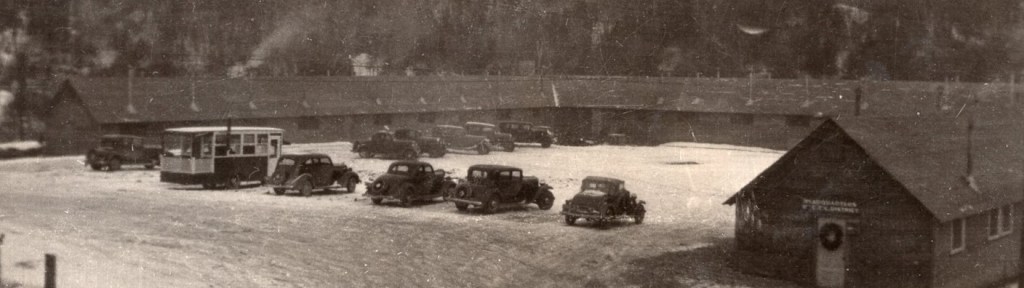
Photograph taken days (maybe hours) before the fire. Waterbury Historical Society
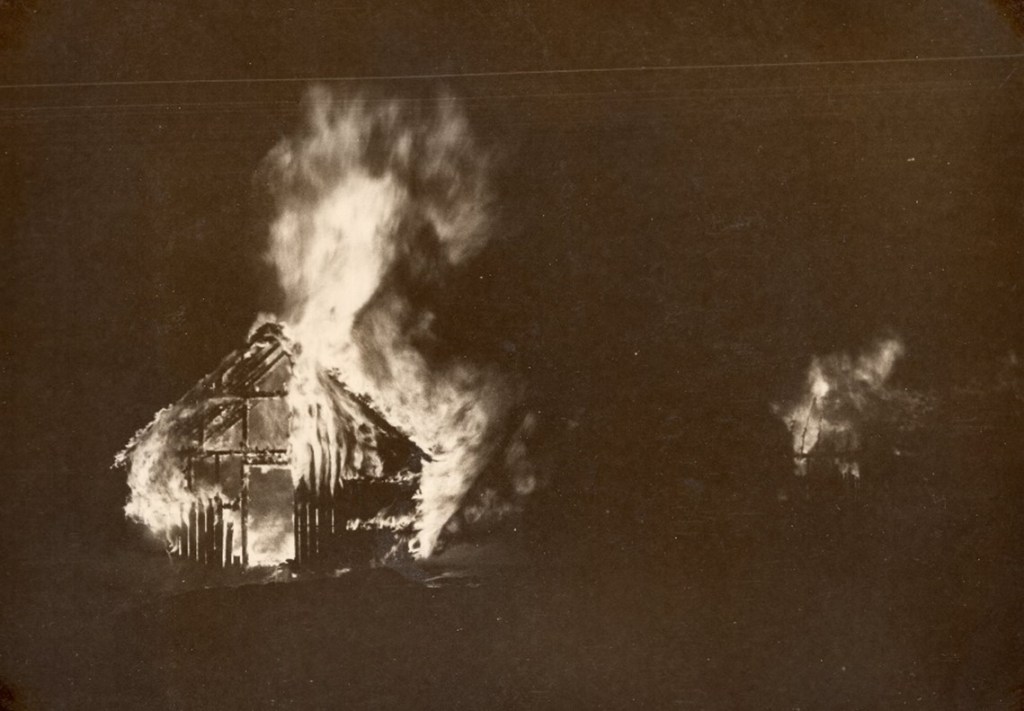
On Christmas Night 1935 at 2:30 AM the Officer’s Quarters at Civilian Conservation Corps (CCC) Camp Charles Smith in Waterbury erupted in flames. Four Army officers perished in the roaring inferno that left the motel-sized building level to the ground in less than 15 minutes. The entire Board of Inquiry file is available from the U.S. National Archives in College Park, MD. A read of the file shows several witnesses claimed to see the fire start but none agreed on where; the point of origin was never determined. The board concluded there was no evidence of arson, but they were unable to officially determine how and why the deadly fire started.
Unofficially, CCC veterans, the newspapers, and locals suspected methane gas could have been both the cause and the reason the building burned so quickly. The Army was using poorly built and leaky stoves burning cheap soft coal…a recipe for generating methane gas.
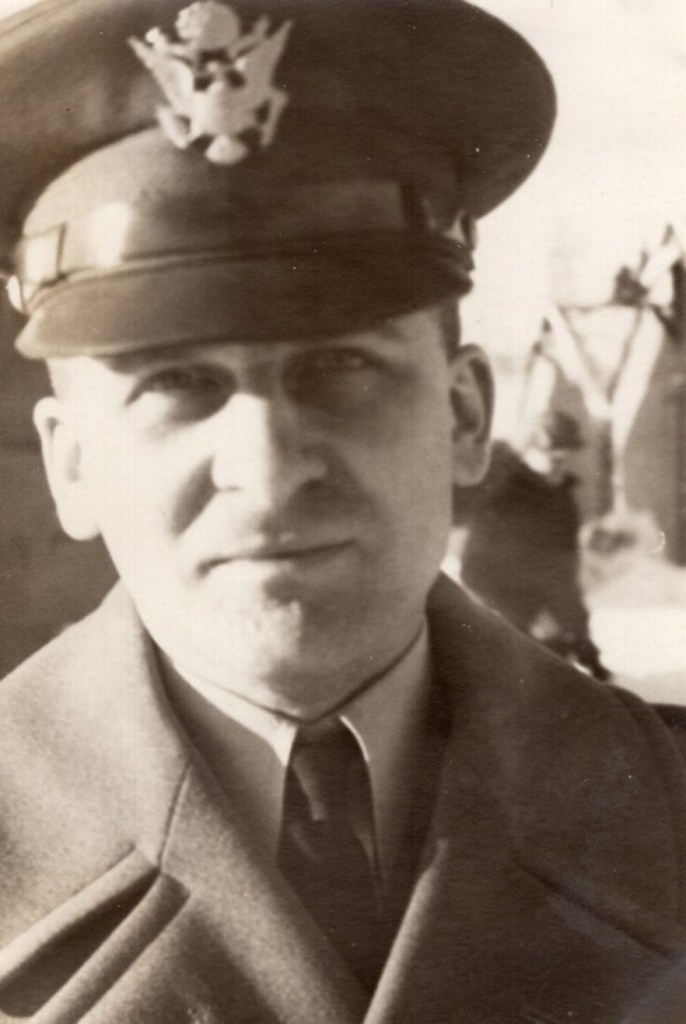
Lt. Henry Howard. Waterbury Historical Society
In 1996 the family of CCC Lt. Henry Howard donated his scrapbook of letters, clippings, and photographs to the Waterbury Historical Society for their archives. Lt. Howard barely survived the fire, and his scrapbook contained the only known photograph of the Officer’s Quarters from before the fire. AND…there were two astonishing photos that had clearly never been seen by the Board of Inquiry. These two photos showed the early stages of the fire thereby solving the decades old mystery. The fire clearly began at opposite ends of the building at the same time: methane gas. Case closed. We’ll never know why Lt. Henry hadn’t shared such critical photos with the board despite the fact he was one of the key witnesses at the Inquiry.
Fire erupts at both ends of the barracks but not in the middle. Waterbury Historical Society
Modern colorized version courtesy of Moriah Keat
Body Never Identified
Rutland Daily Herald
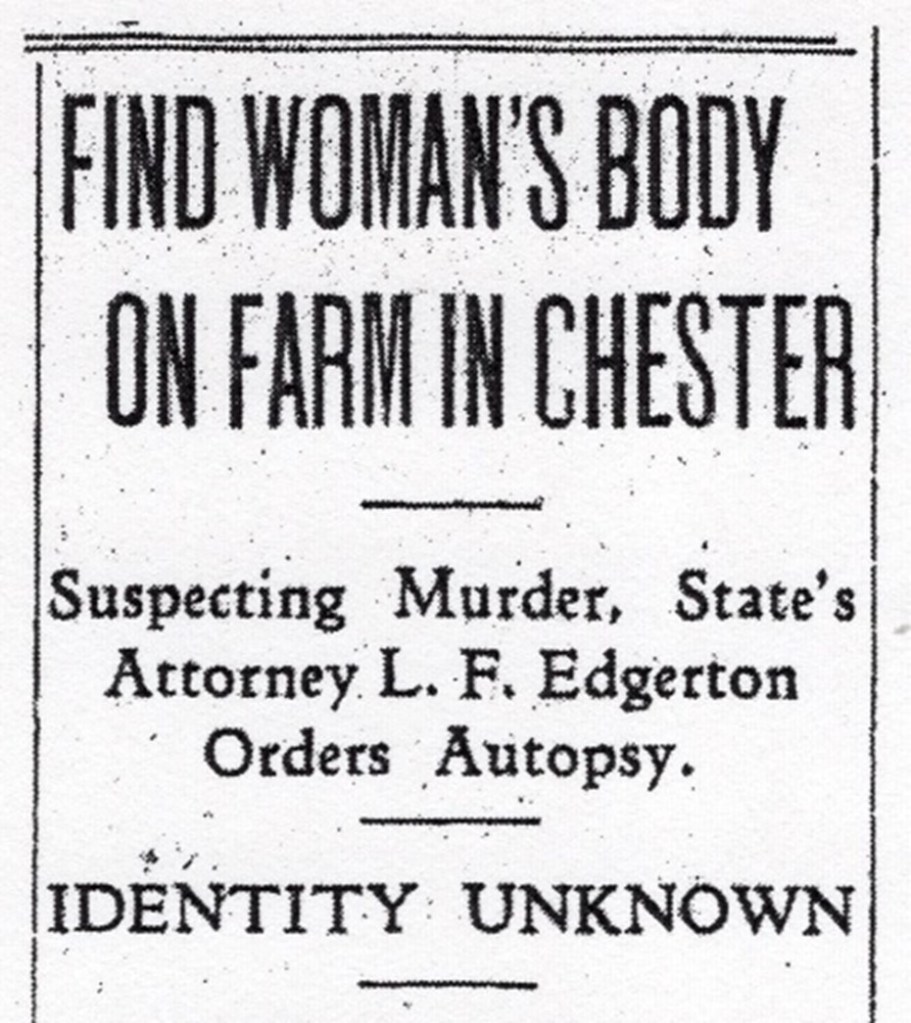
In August of 1929 an unidentified female body was found in a farm field in Chester. Her identity remains unknown to this day. Although officially ruled as a suicide, there were very serious doubts within the small group of investigators.
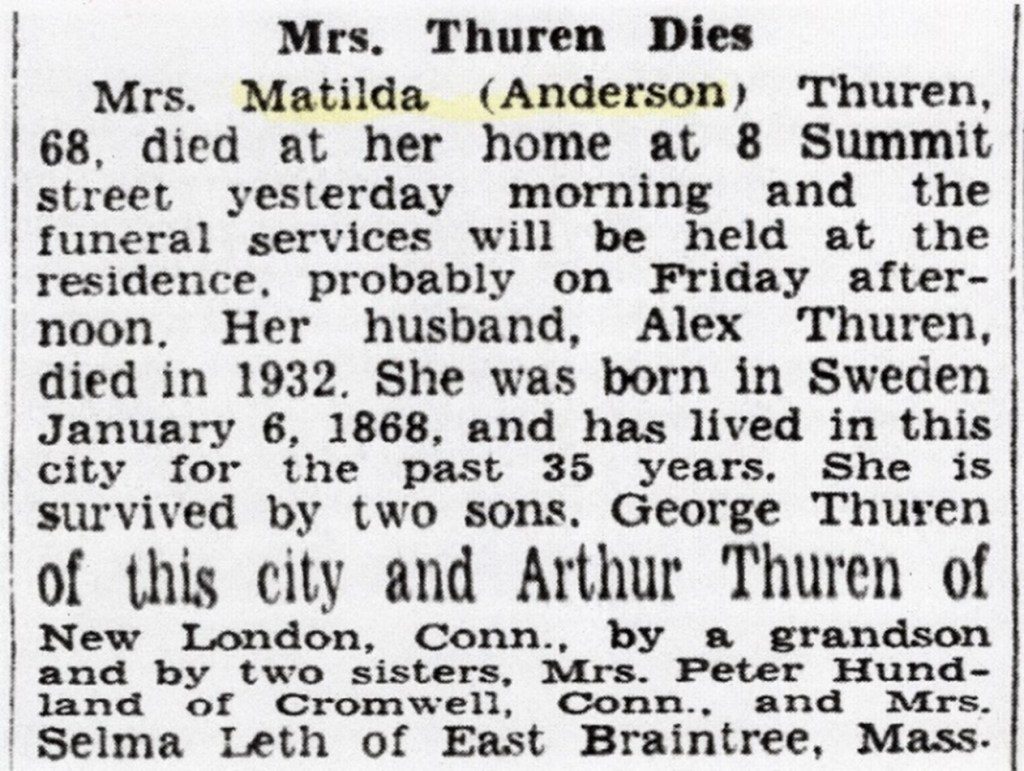
Among several other females, the body was once suspected of being that of Matilda Anderson, a native of Sweden, who had been anonymously reported as missing from Boston. There was extensive news coverage about the attempts to find Anderson and the trail seemed to lead to Vermont. Using today’s newspaper archives at the Vermont State Archives and Records Administration in Middlesex, coupled with the ability to use hindsight, we can easily see Anderson was never missing and she wasn’t from Boston. She was a resident of Burlington and appeared frequently in the social section of the Burlington Free Press from 1929 all the way to her obituary in 1935.
Burlington Free Press
If you have an interest in researching an old crime, old disappearance, old tragedy, births, marriages, your street name, or any of an endless list of topics – visit any public archive. You will be welcomed, and you may find the answer that eluded everyone before you.
Archives Month occurs every October and promotes the work of archivists and the archives they provide access to and preserve. This year, the Vermont Archives Month theme is Archives Discovered, examining the process of making archival materials available and stories about what is unearthed. Check back over the next weeks for additional posts from authors around Vermont.
October is American Archives Month, a time to highlight the importance of archives and the work of archivists. The theme for this October is communication, and the Vermont State Archives and Records Administration (VSARA) has created an exhibit to show how the State and its constituents communicate with each other. This is the last in our blog post series (read the first post and the second post), giving a sneak peek of the third part of the exhibit, how the state promotes itself outside of Vermont. The examples shown here discuss how Vermont has chosen to promote and portray itself externally, which has shaped the associations non-Vermonters hold about the state.
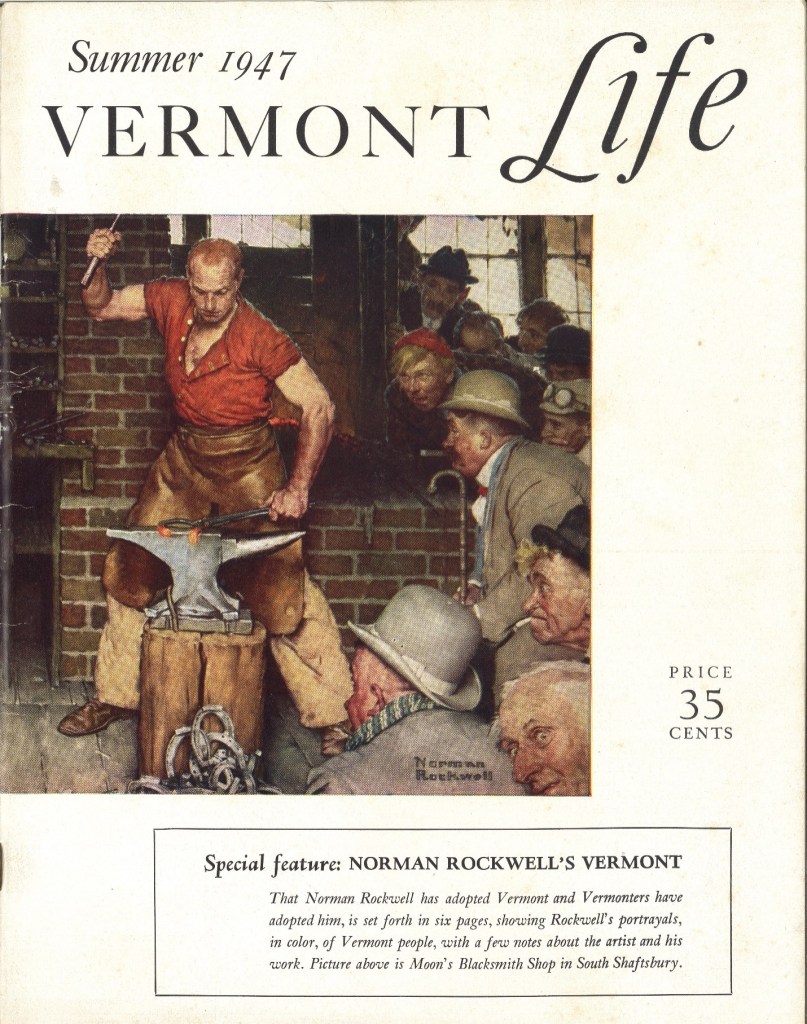
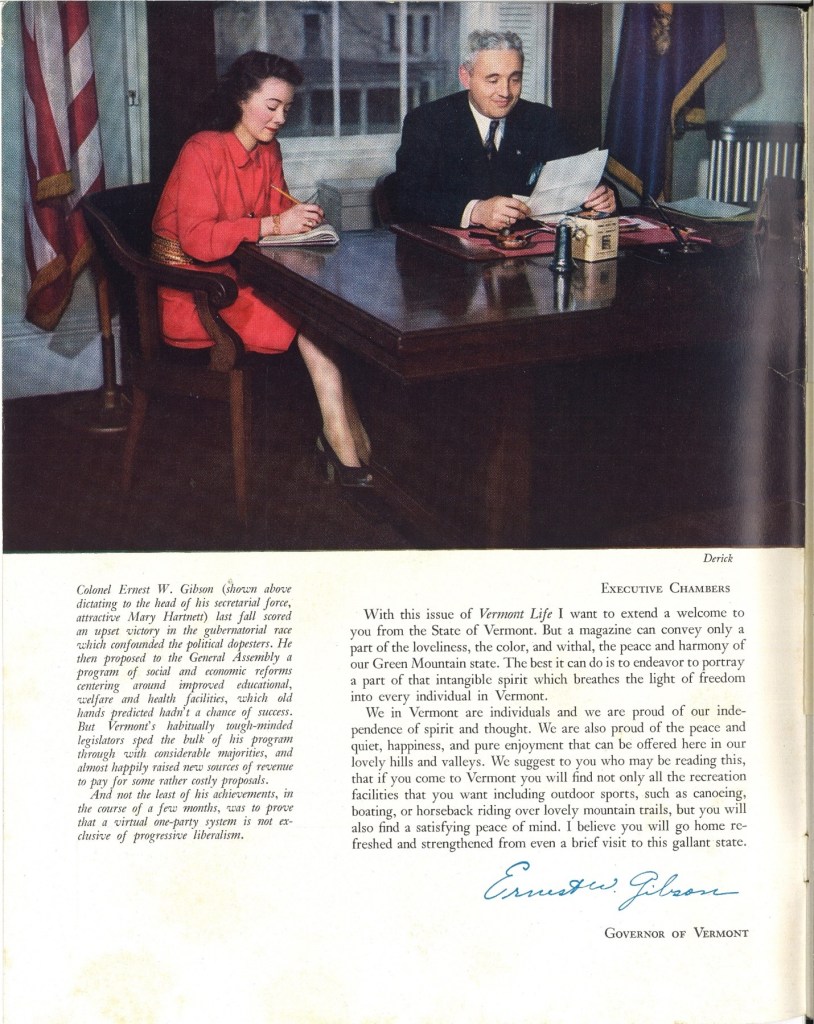
Vermont Life magazine, Summer 1947
Vermont Life magazine was published for 72 years, from 1946 to 2018, with the purpose of marketing Vermont to out-of-staters. The magazine offered readers bright, colorful photos of Vermont’s natural beauty and historical charms, while articles commonly celebrated Vermont’s most popular attractions: fall foliage, skiing, agriculture, and traditional Yankee customs and crafts. Inspired by similar magazines published by other states, such as Arizona Highways, the magazine helped to define the character of Vermont’s tourism industry in the years following World War II. While later issues of Vermont Life did not outwardly portray the magazine as a publication of the state government, earlier issues made that fact more obvious and often included introductory letters from the governor. (View the entire issue, courtesy of Middlebury College)
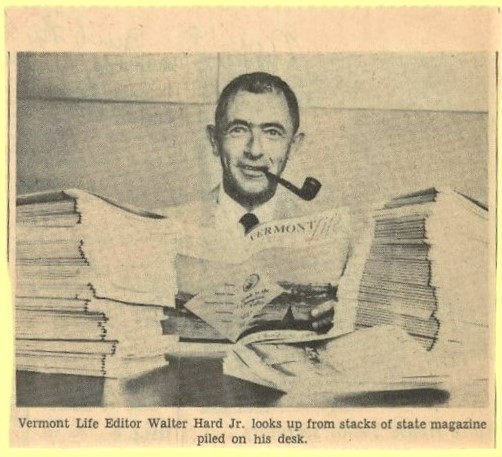
Walter Hand Jr. newspaper clipping, Vermont Life scrapbook, date unknown
Vermont Life contributors, like Walter Hand Jr., who served as editor from 1950-1975, and Vrest Orton (who would also co-found the popular Vermont Country Store and catalog) bolstered tourism and popularized a particular concept of Vermont, by introducing readers to Vermont’s picturesque covered bridges and white clapboard churches, as well as its long-maintained traditions, such as maple sugaring and annual town meetings.
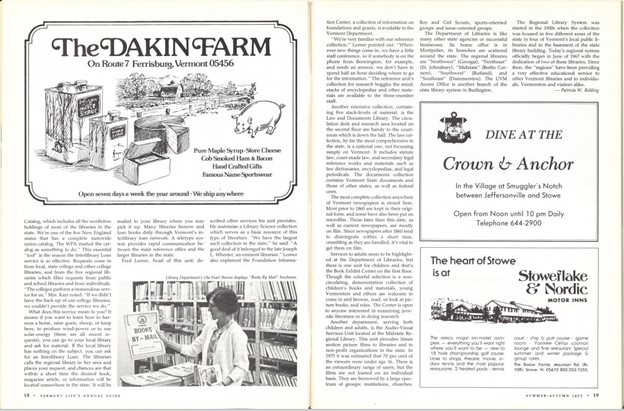
Vermont’s Treasury of Libraries: A Stack of Surprises in Book Places, Vermont Life, Annual Guide Summer/Autumn 1977
As a publication of Vermont Department of Tourism and Marketing, Vermont Life provided the opportunity for different branches of state government to have their work featured in a widely-read publication. This article, which reports on the services not only of Vermont’s local public libraries, but also that of the Vermont Department of Libraries, was co-written by Patricia W. Belding, who served as a librarian at the Aldrich Library in Barre, Vermont from 1967 to 1993. (View the entire article)
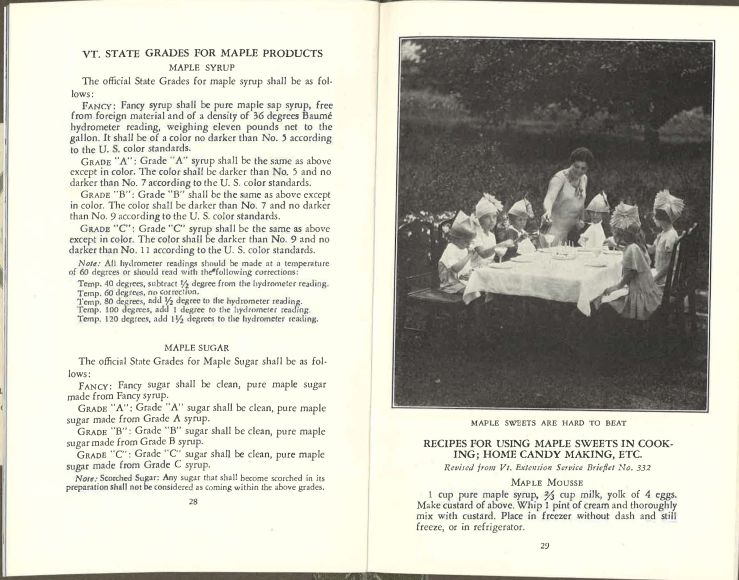
Vermont: Maple Sugar and Maple Syrup, 1936
“Vermont: Maple Sugar and Maple Syrup” was published by the Vermont Department of Agriculture as a primer on all things maple, discussing the history of maple sugar and syrup in Vermont, as well as the industry that had grown around them up to 1936. Not just informational, the booklet also offers practical tips, including pointers on Vermont’s grading system for maple products. Recipes are also included in the booklet, with suggestions ranging from baked beans to maple candies, in order to show the possible culinary applications of Vermont maple products. (View the entire document).
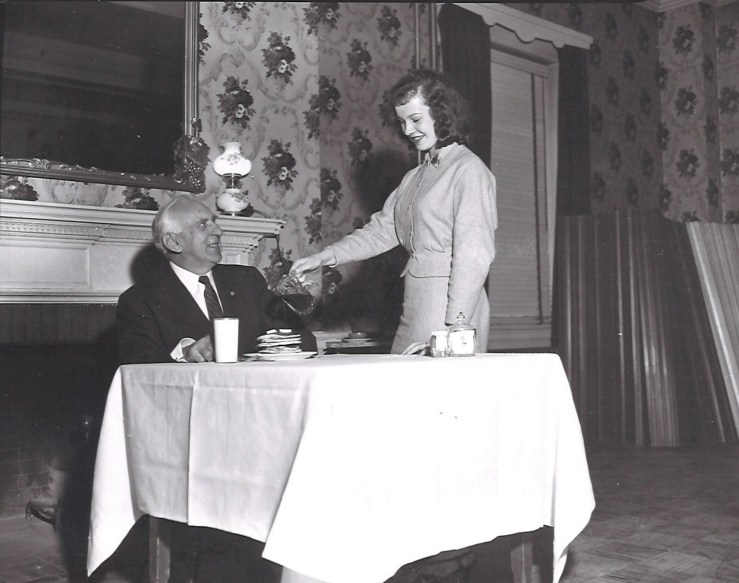
Vermont Maple Queen with Governor Johnson, 1957
Brenda Naatz from St. Johnsbury was selected as the second Maple Queen during a 1957 competition sponsored by the Vermont Maple Sugar Makers Association. The Maple Queen would make appearances at festivals and for photo opportunities with state leaders to represent the industry. There were several variations of produce royalty sponsored by agricultural organizations; at one time Vermont had a Dairy Queen, Honey Queen, Potato Queen, and Poultry Queen.
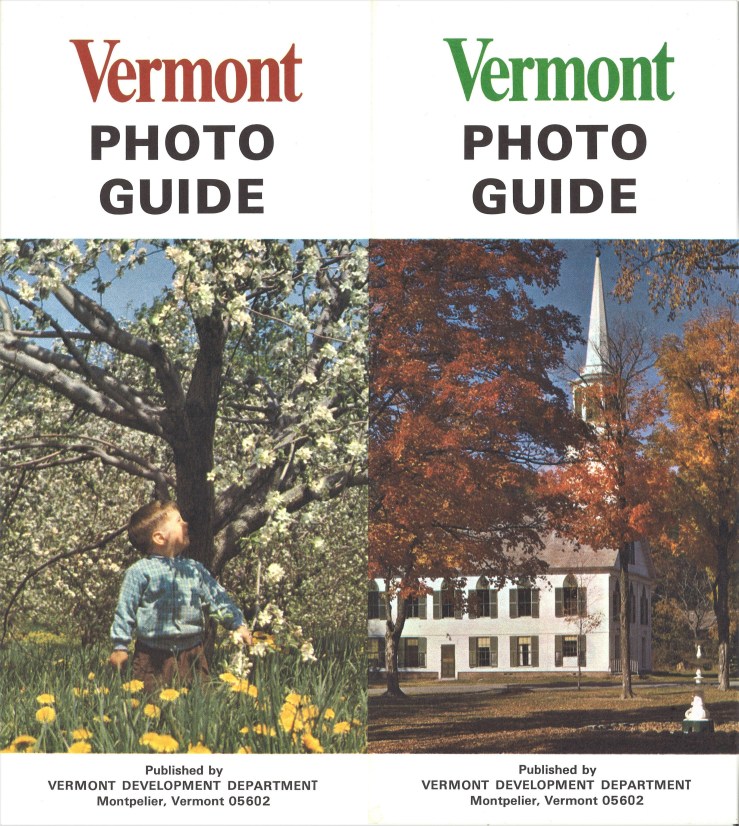
Vermont Photo Guide Pamphlet, undated
This pamphlet was distributed by the Vermont Development Department and highlights the “25 Top Photo Locations” across the state. The Vermont Development Department was tasked with, among other duties, the promotion of the state. Pamphlets such as these may have been distributed not only across the state at information booths staffed during summer tourist months but also at tourism information centers in several other states encouraging visitors to come to Vermont. (View the entire document)
“Color Vermont: A Souvenir Coloring Book of Vermont,” 1972
The Vermont State Chamber of Commerce published this promotional coloring book in 1972. The pages contain scenes of Vermont over time including Samuel de Champlain, the Green Mountain Boys, and the Statehouse. Other pages portray a variety of activities that draw tourists to Vermont each year, as well as some of the well-known icons of the state, such as maple sugaring, dairy cows, and covered bridges. (View more coloring pages)
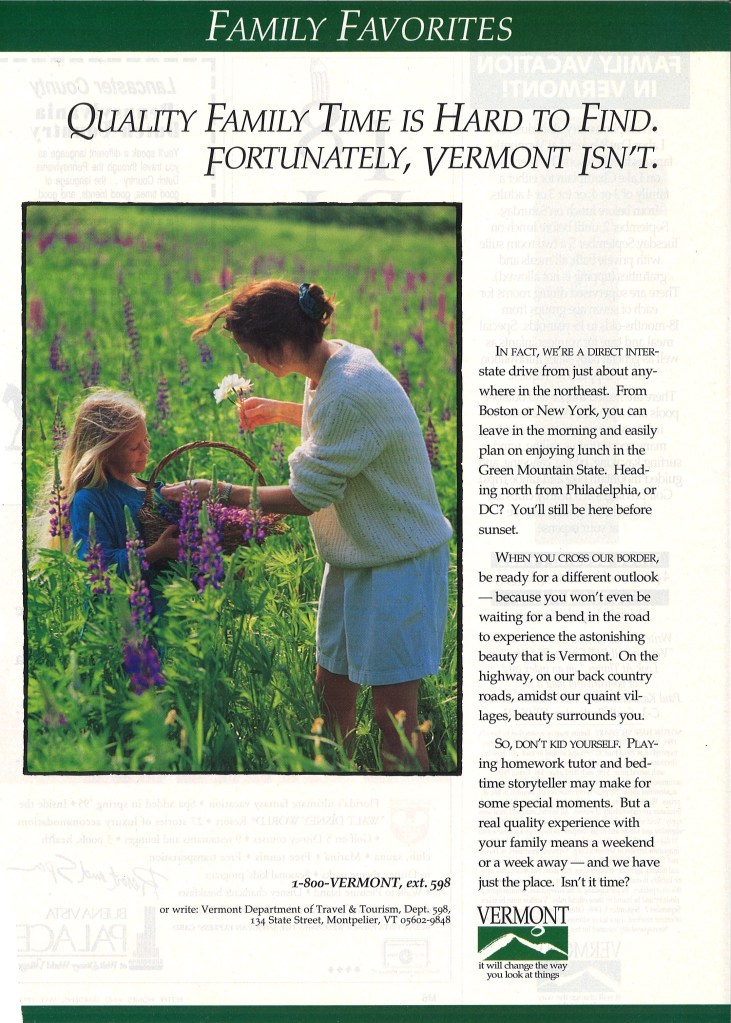
Vermont Tourism Ad, Better Homes & Gardens magazine, May 1995
This advertisement in Better Homes and Gardens’ May 1995 issue supplement paints Vermont as an idyllic retreat not far away from the hustle and bustle of the Northeast’s metropolitan areas. The Vermont Department of Tourism and Marketing, as well as its predecessors, have cast the allure of Vermont as a vacation destination far and wide. In the summer 1995 season alone, print ads were placed in such publications as Better Homes & Gardens, Country Home, Yankee Magazine,the Boston Globe, the New York Times, and other regional newspapers. Video slots were seen during commercial breaks of prominent shows such as Headline News, CBS This Morning, the Today Show, and on regional news stations.
You can view the entire exhibit in person at VSARA’s open house, Thursday, October 27 any time between 5-7 PM. See the exhibit, talk with VSARA staff, and get a behind-the-scenes tour. This is a FREE event! VSARA is located at 1078 US Route 2 in Middlesex; for any questions, please contact sos.vhrp@vermont.gov.
October is American Archives Month, a time to highlight the importance of archives and the work of archivists. The theme for this October is communication, and the Vermont State Archives and Records Administration (VSARA) has created an exhibit to show how the State and its constituents communicate with each other. Following up on our first post, here is a sneak peek of the second part of the exhibit, how the public interacts with its government. The examples shown here illustrate how Vermonters’ voices can help shape equal rights, policy-level decisions, and state identity.
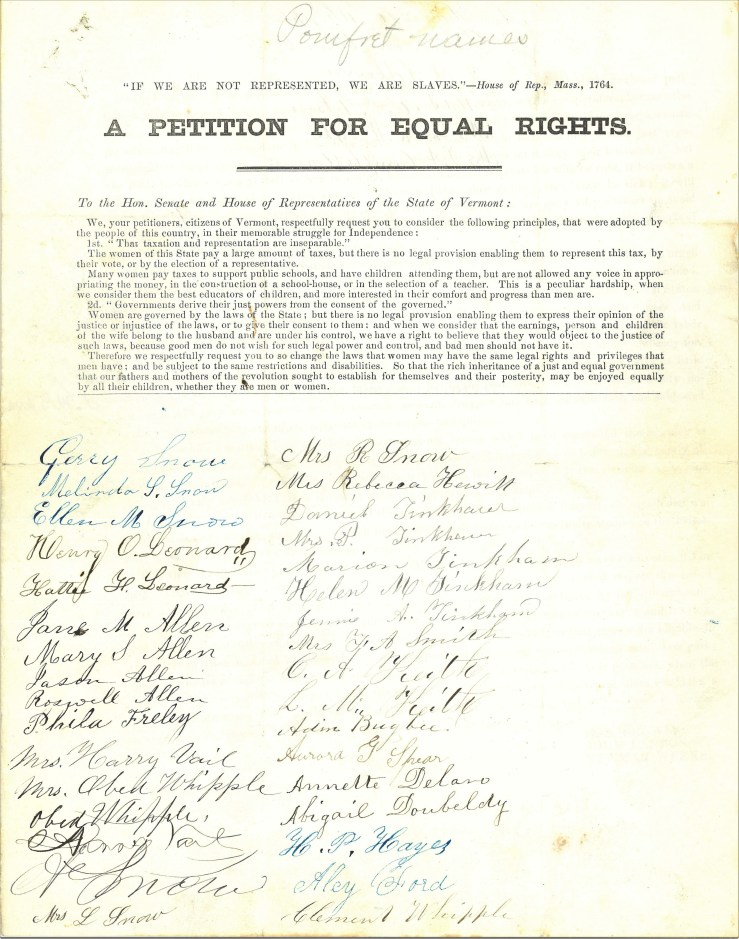
Petition for Equal Rights, 1858
Women in America weren’t given the right to vote until the ratification of the 19th amendment in 1920. As early as 1858, Vermont women made their opinions on the subject known. This is one example of many such petitions by women, and it argued that women were taxed without representation in the law. In 1880, the Vermont legislature granted tax-paying women the right to vote in school district meetings, as well as the ability to serve as town clerks and to hold some school offices.
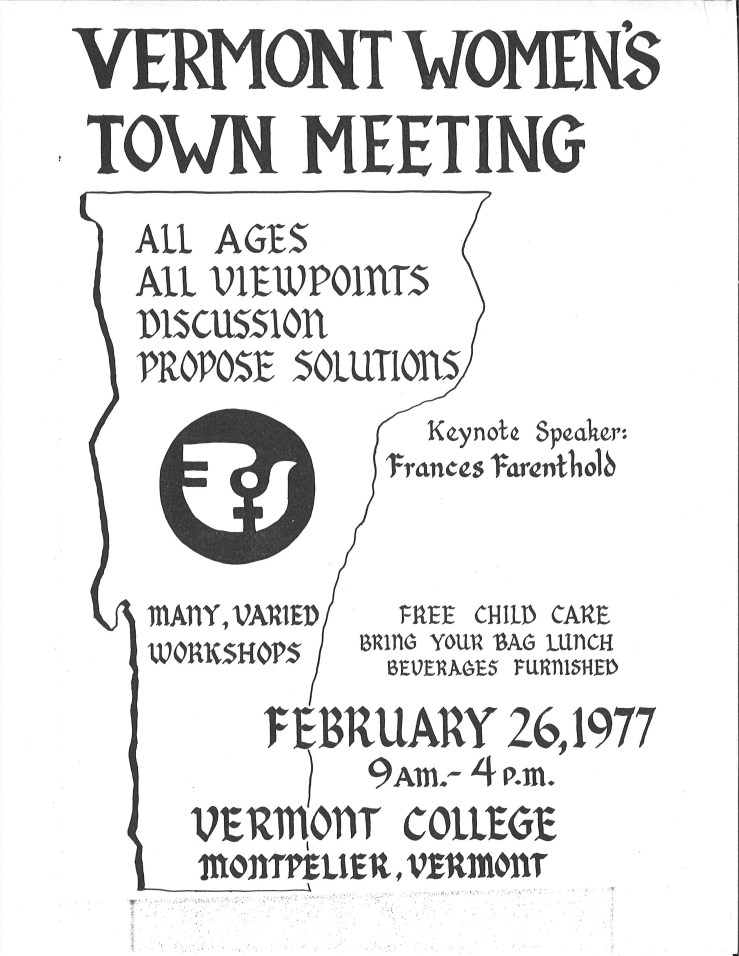
Vermont Women’s Town Meeting Poster, 1977
Vermont hosted a Women’s Town Meeting on February 26, 1977, to discuss women’s goals and accomplishments. It was the first such meeting in the nation and, despite a snowstorm, many women came to Montpelier for the event. Similar meetings were held across the country to draft recommendations and to delegate representatives to send to the National Women’s Conference in November of that year. The meetings were funded by a grant from the National Commission on the Observance of the International Women’s Year established by President Gerald Ford.
Help Choose Vermont’s State Vegetable, 1984
This poster represents a public campaign to help select Vermont’s State Vegetable, sponsored in part by the Departments of Agriculture and Education. It features a pad of ballot postcards, instructions for how to participate if there are no postcards left, and information about a student essay contest and prizes. The poster features cartoon vegetables drawn by Vermont illustrator, Tim Newcomb. This issue was not picked up by the Vermont Legislature in that year, and it wasn’t until 2015 that Vermont selected its representative vegetable, the Gilfeather turnip.
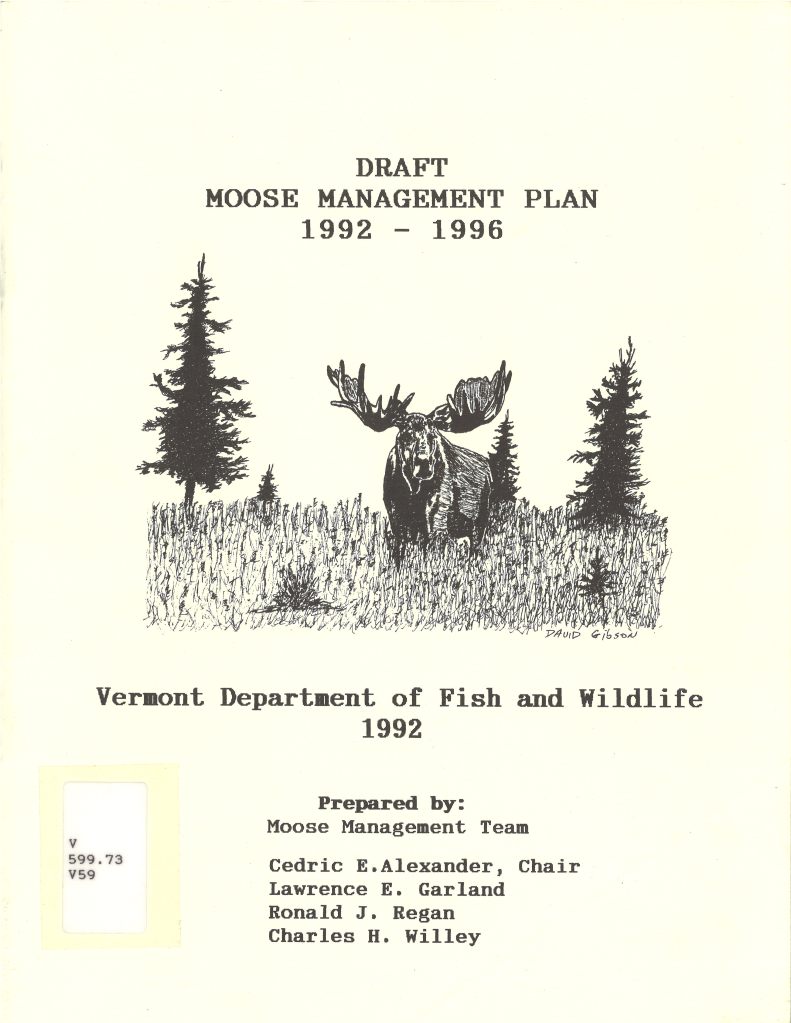
Moose Management Plan, 1992 – 1996
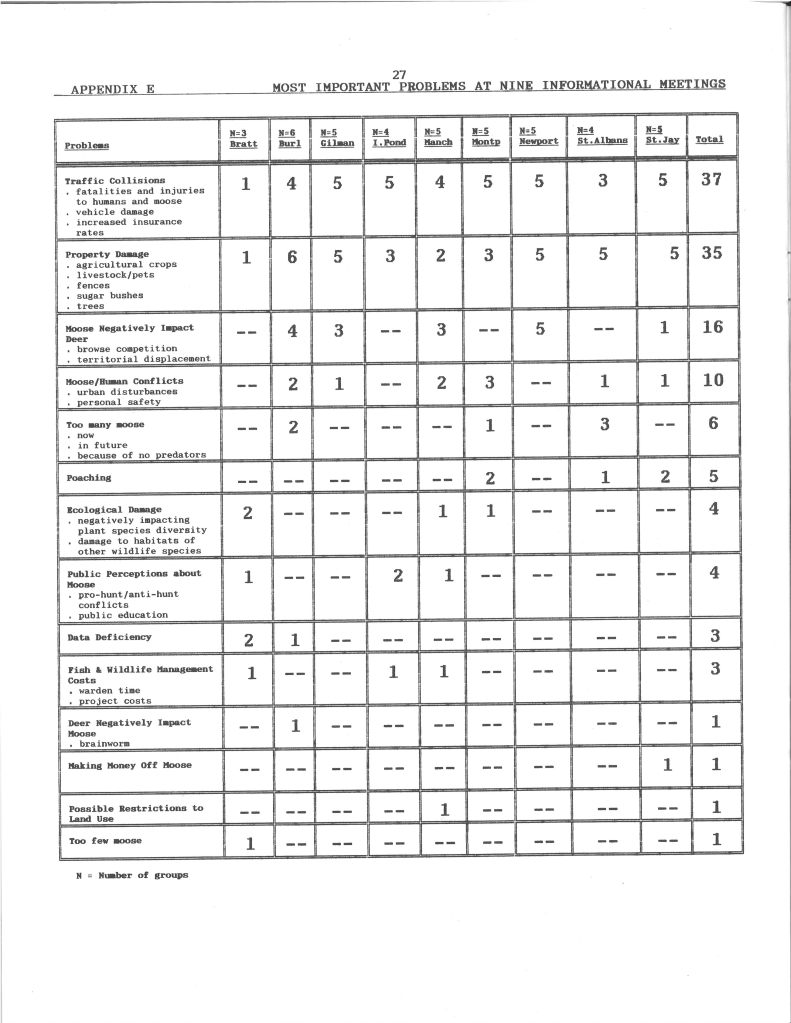
This Moose Management Plan was the first plan drafted by the Department of Fish and Wildlife to sustainably manage Vermont’s growing moose population. It outlines the intent of the Department, the goals of the plan, and the steps to be taken for its implementation. While the initiative was spearheaded by the Department, the plan relied extensively on public feedback in the form of a committee of interested Vermonters, 18 public meetings, and surveys, all of which help inform the plan’s direction. (View the entire document)
You can view the entire exhibit in person at VSARA’s open house, Thursday, October 27 any time between 5-7 PM. See the exhibit, talk with VSARA staff, and get a behind-the-scenes tour. This is a FREE event! VSARA is located at 1078 US Route 2 in Middlesex; for any questions, please contact sos.vhrp@vermont.gov.
October is American Archives Month, a time to highlight the importance of archives and the work of archivists. The theme for this October is communication, and the Vermont State Archives and Records Administration (VSARA) has created an exhibit to show how the State and its constituents communicate with each other. Here is a sneak peek of the first part of the exhibit, how the government communicates information to the public. The examples shown here show how the State has used direct communication with Vermonters to convey important information, support recruitment efforts, educate about new laws and regulations, and encourage safe, legal practices.
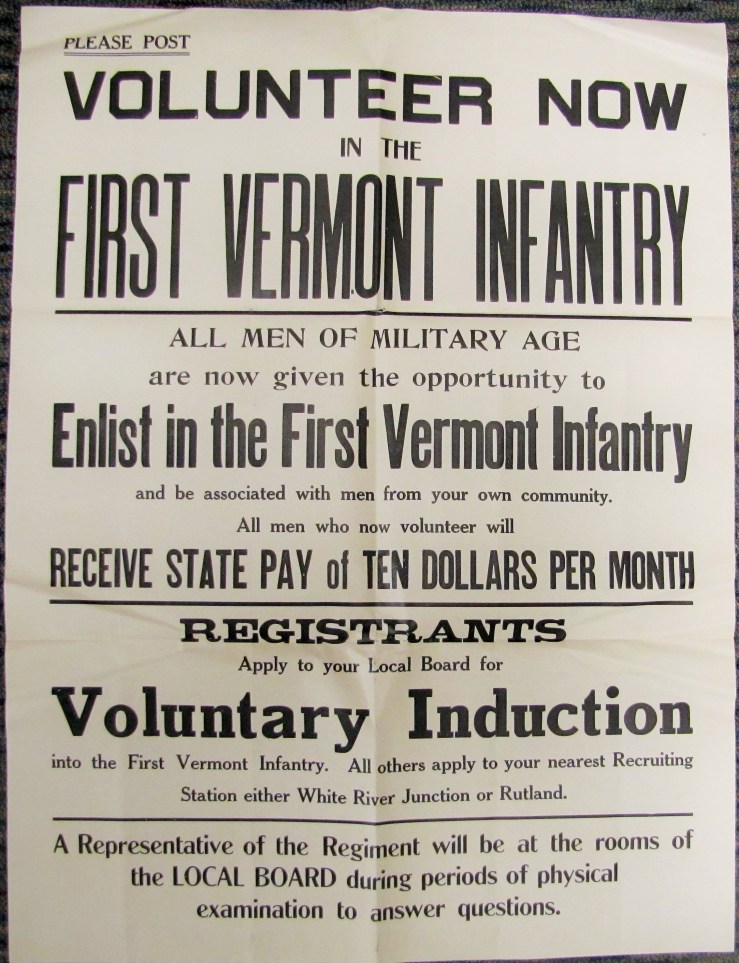
WWI Recruitment Poster, 1917
When the United States entered the First World War in 1917, the call for new recruits went out on a national scale and many government agencies, including in Vermont, played their part to support this endeavor. This recruitment poster, issued by the Office of the Adjutant and Inspector General in 1917, calls upon Vermont men of military age to enlist in the First Vermont Infantry. It details the benefits of enlistment, in terms not only of pay, but also in serving with men from their own communities, and it provides those interested with the details they needed to apply.
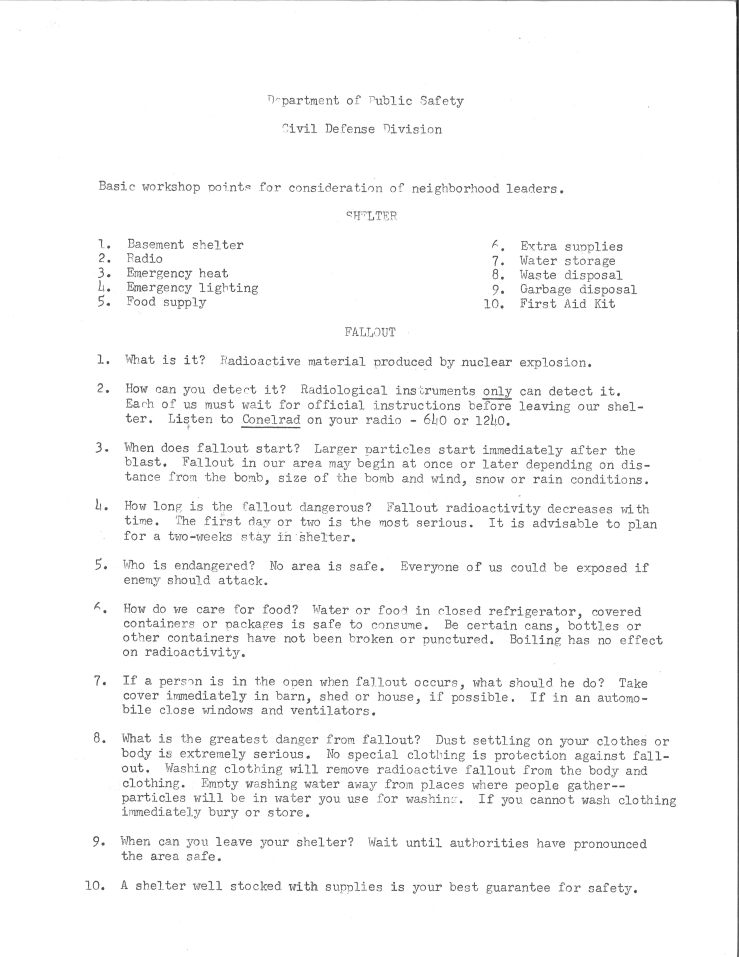
Act 224 of 1951 created the Civil Defense Division under the Vermont Department of Public Safety. Charged with preparing for and organizing emergency functions beyond military and federal responsibility, the Division coordinated civilian response and education during the height of the Cold War. In this Q&A document, the Division provides answers to the public’s questions about nuclear explosions and fallout, as well as how to outfit a shelter for protection and survival. Beyond the practicalities, the end of the document asks: “Afterward, then what?” and responds with an existential answer: “The whole purpose of survival is the hope of a future worth living.” (View the entire document)
Basic Workshop Points for Consideration of Neighborhood Leaders, 1960s
Organizing a civil defense effort was a hyper-local affair, with individual communities creating and maintaining their own plans and procedures for dealing with disaster. Vermont’s Civil Defense Division created this list of practical information for neighborhood leaders organizing efforts in their local communities. The information includes suggested shelter supplies, facts about fallout, basic first aid procedures, and tips for home fire prevention, as well as a rule-of-thumb for radiation decay. The Division was in operation from its creation in 1951 until 1985, when it was officially redesignated as the Division of Emergency Management. (View the entire document)
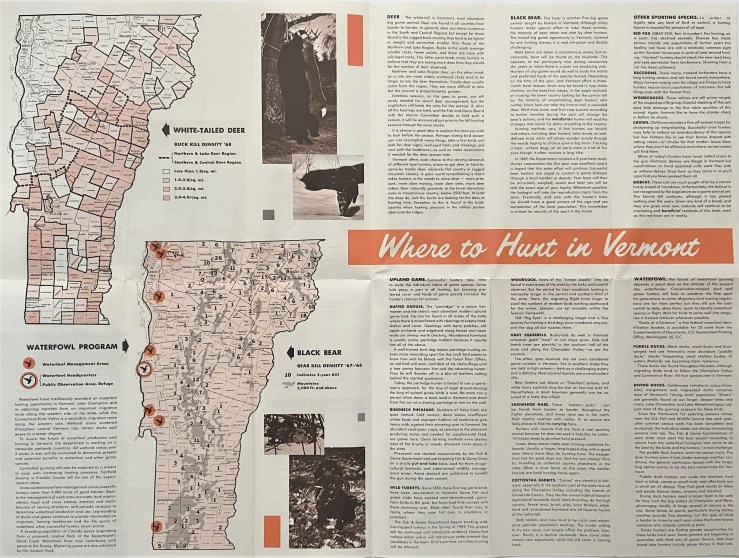
Vermont Guide to Hunting, 1968
This pamphlet was distributed by the Vermont Department of Fish and Game and contains hunting license information, indicators for Waterfowl Management Areas, and shows the public lands open to hunting. It also contains kill density maps for white-tailed deer and bear in 1967-1968. This guide also offers information on where to hunt in Vermont for small game, recommendations for how to plan one’s hunt, and provides an informative piece on the history of deer hunting in the state and how herd populations ebb and flow. (View the entire document)
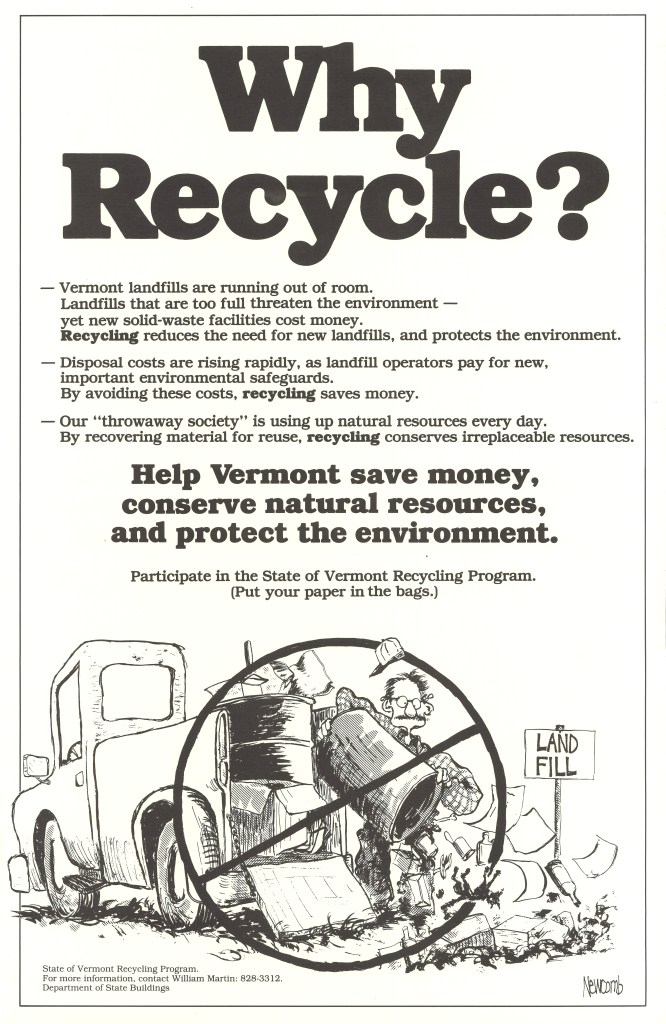
Why Recycle? Poster, 1984
This poster from the Department of State Buildings cites the dwindling space in Vermont landfills, the increasing disposal costs, and the natural resources being used up by the “throwaway society.” It encourages residents to participate in the State of Vermont Recycling Program to help conserve resources, reduce the need for new landfills, and protect the environment.
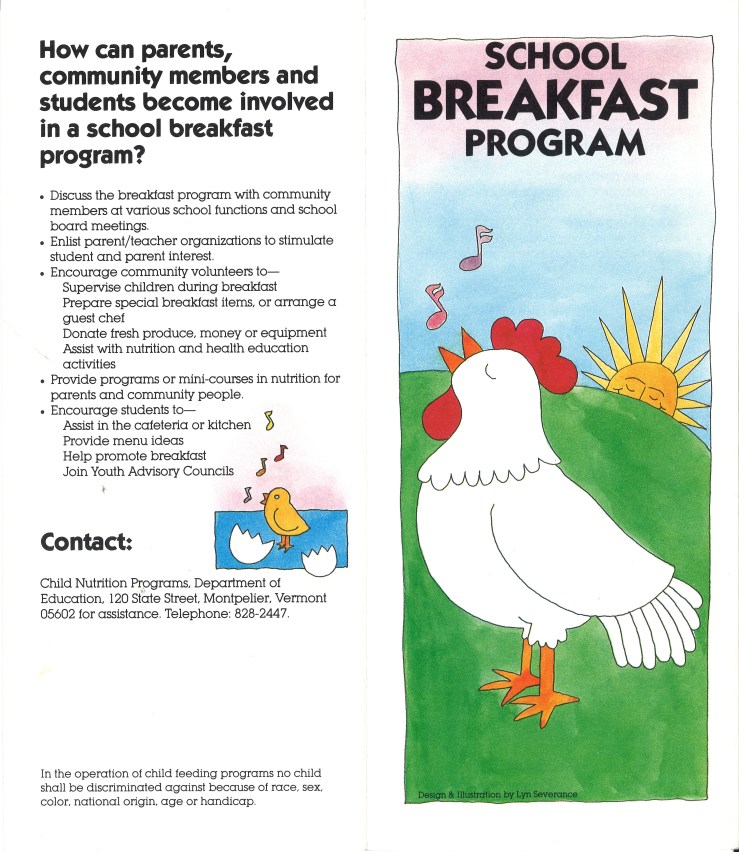
School Breakfast Program Pamphlet and Illustrations, undated
This pamphlet was distributed by the Vermont Department of Education’s Child Nutrition Programs to explain how the School Breakfast Program may be implemented within schools across the state. Information presented focuses on how the staff of the Child Nutrition Program can assist in the launch of breakfast programs, requirements of the program to receive funding, and how to engage the local community in supporting a breakfast program at their own schools. Included are original illustrations by Lyn Severance which are incorporated into the pamphlet’s design. (View the entire document)
You can view the entire exhibit in person at VSARA’s open house, Thursday, October 27 any time between 5-7 PM. See the exhibit, talk with VSARA staff, and get a behind-the-scenes tour. This is a FREE event! VSARA is located at 1078 US Route 2 in Middlesex; for any questions, please contact sos.vhrp@vermont.gov.
-Beth Kanell, Archives Month Committee Member, Waterford Historical Society
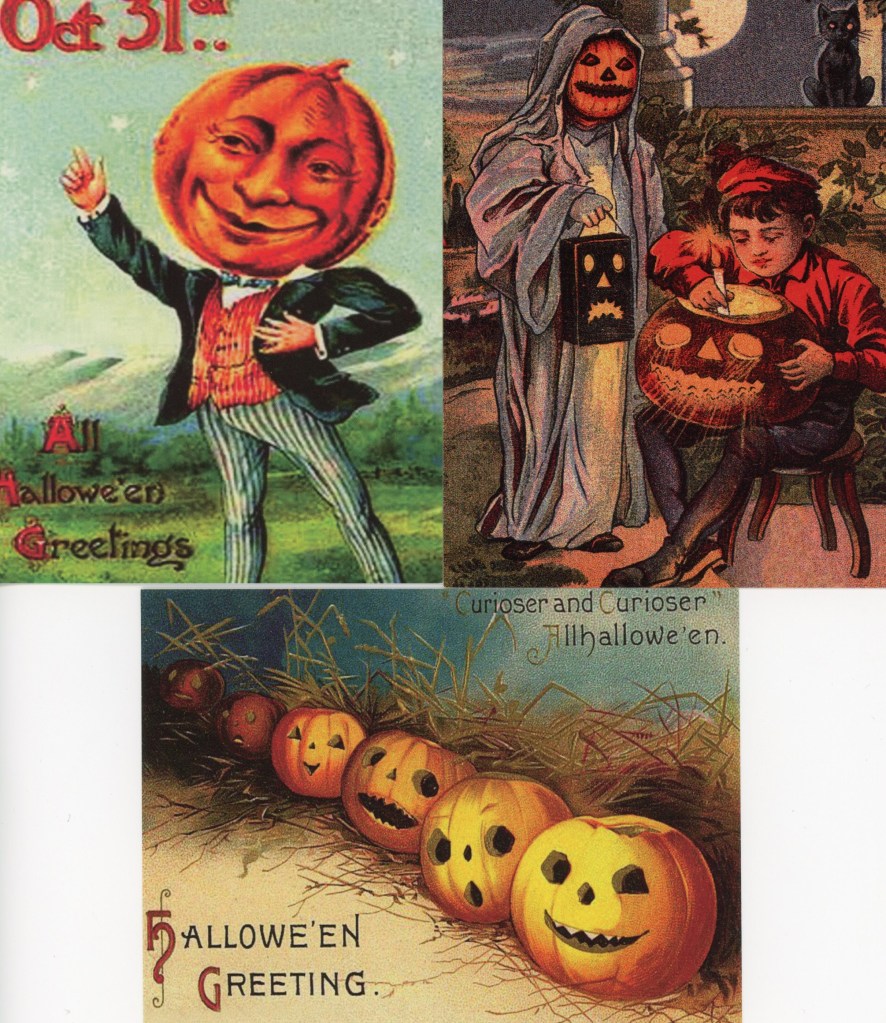
Happy Halloween!
Image courtesy the author
One of the great heartaches of an exploring historian or archivist happens when a picture or postcard, or even a letter, has been fastened with some kind of glue or paste or tape, into a scrapbook.
The big plus of a scrapbook is that it illustrates how items connect with the person pulling them together. But the big minus is, vital information on the “flip side” of an item can be lost or damaged, if the item is fastened in a way that won’t let it pull free with its details intact.
Image courtesy the author
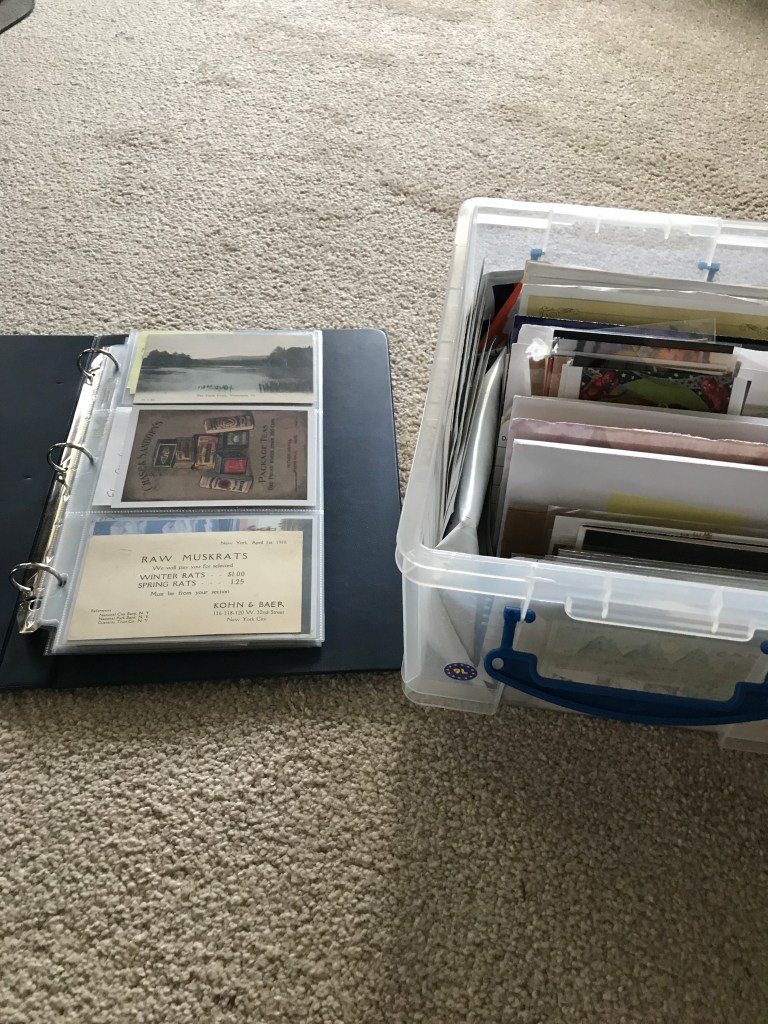
Storing vintage postcards is much simpler today than even a few years ago. Two good storage systems are shown here: a loose-leaf album with pages that have see-through pockets for the postcards, and a secure moisture-resistant container that can be divided into labeled section for larger numbers of cards. The loose-leaf album’s big advantages show up when you take it to a gathering or simply pull it out to show an archive visitor: It’s simple to examine the cards, front and back, without handling or damaging them. Using a separate album for each topic or donor adds to the value of this method.
The container’s obvious plus is the quantity of cards it can hold. But it must be filled almost to capacity, to ensure that the cards don’t bend or have their corners hurt with movement of the container. Also, each card should be in its own plastic sleeve, preferably of an archivally stable plastic.
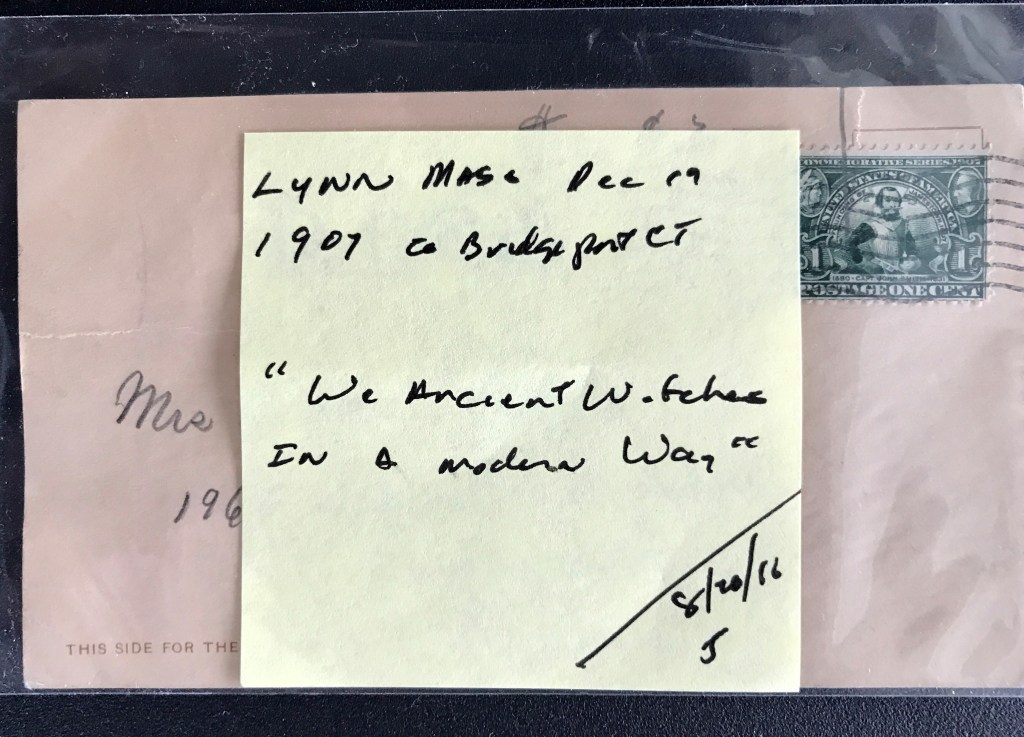
With either of these methods, it’s important to store information with each card. The simplest method used in the Kanell postcard archive is to jot the information on a “sticky tag” and press it into place—never on the card itself, but on the outside of the plastic sleeve holding it.
Images courtesy the author
An additional method, very useful in the long run, is to scan each card and its accompanying information and store these images in a well-labeled file. Consider keywords and family names, as well as dates, in selecting how to label and organize this information.
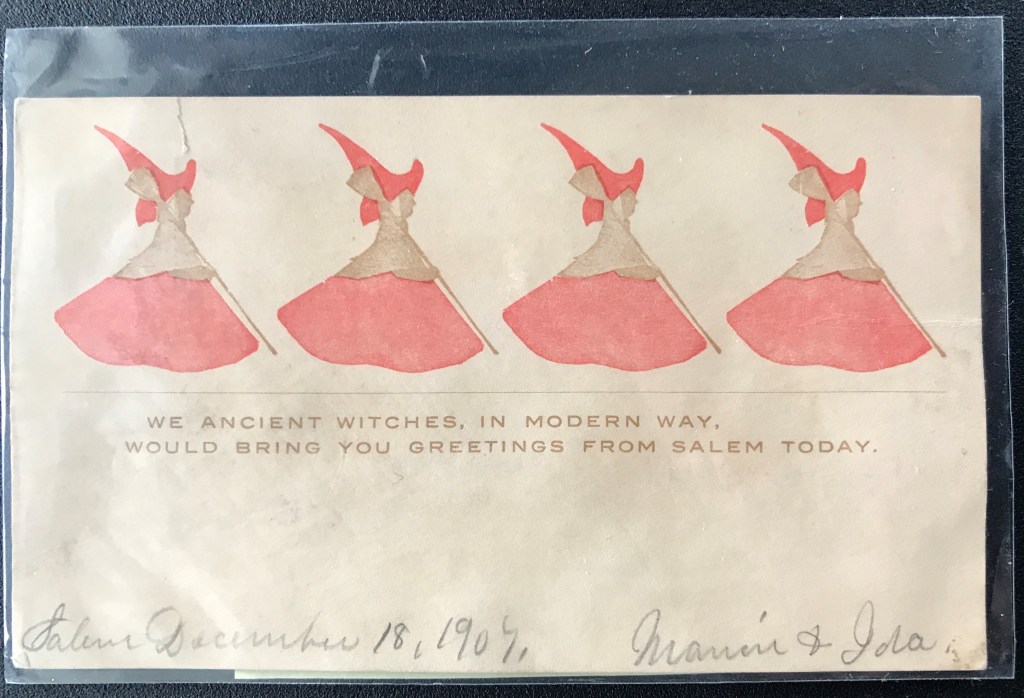
There is one added plus to collecting postcards, which were at their most interesting in the so-called Golden Age of penny postcards, 1907 to 1915: Not only do you preserve a meaningful and often entertaining image, but the postmark, stamp, addressee, message, and writer are all valuable information.
So archive your postcards with care—and never glue them into scrapbooks!
-Prudence Doherty, Archives Month Committee Member, Silver Special Collections Library, University of Vermont
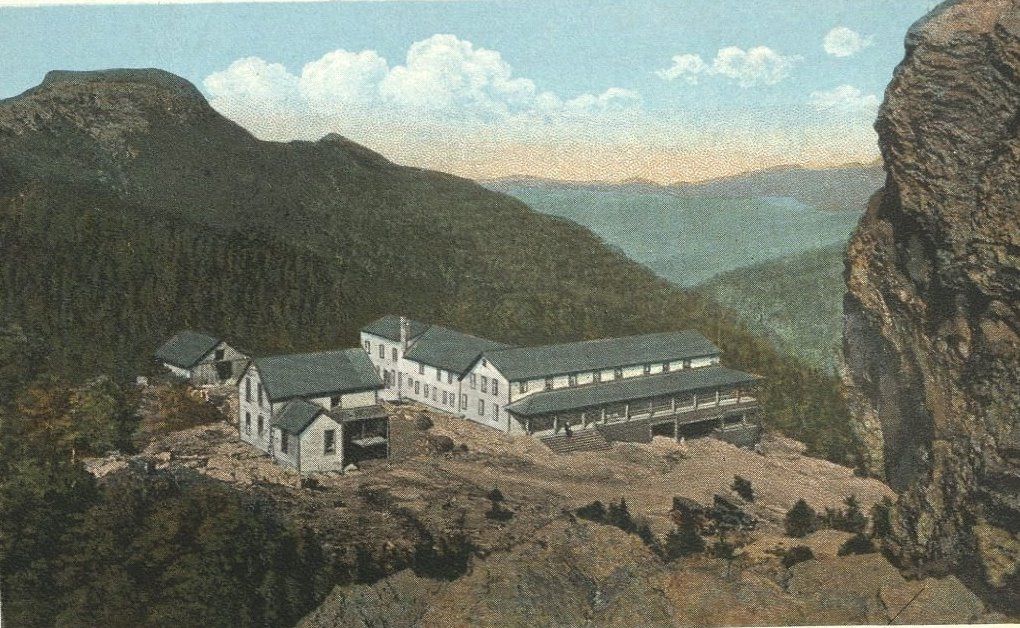
For one hundred years, the Summit House welcomed day hikers and overnight visitors to the top of Mount Mansfield. The hotel closed in 1958 and the owners auctioned its furnishings before the structure burned in 1964. The Summit House business records, including boxes of correspondence, guest registers, and account books, as well as one large scrapbook, now sit on shelves in Silver Special Collections at the University of Vermont.
In 1866, Mattie Whiting Bailey wrote of the Summit House, “a miracle of beauty it must seem to unaccustomed eyes, a gem in the wilderness, if one can imagine such a thing as a brown gem.”
Scrapbooks can be challenging to preserve and use, and the Summit House scrapbook is no exception. The large book was “pasted by Mrs. Charles Jones in 1950,” according to a note on the back of the front cover. While most of the items that Mrs. Jones pasted and stapled are still firmly attached, the scrapbook pages themselves are extremely brittle and have mostly broken away from the laced binding. The simple act of turning the crumbling pages can be intimidating.
The first two items Mrs. Jones pasted into the scrapbook include a 1929 letter from Mrs. Mattie Whiting Bailey of Johnson, Vermont and a typescript of a newspaper article that Bailey wrote in 1866 about a visit to the Summit House. She sent the article to M. C. Lovejoy, manager of the Summit House, as “a contribution to your table of reading matter.” It is likely that Mrs. Jones started the scrapbook in 1950 to preserve visitor accounts, newspaper clippings, photographs, postcards, menus, pamphlets and other documents that had accumulated at the Summit House over the decades.
All of the items pasted on 81 pages provide a remarkable, if random, look at how visitors engaged with the natural scenic attractions and the comforts offered by the Summit House. Many of the visitor accounts are detailed and include commentary on the same topics: how they traveled up the mountain, trails walked and scenic attractions visited, companionship with friends and strangers, and meals eaten. One mid-day dinner included pea soup, roast beef, pork, boiled salmon, pies and rice pudding.
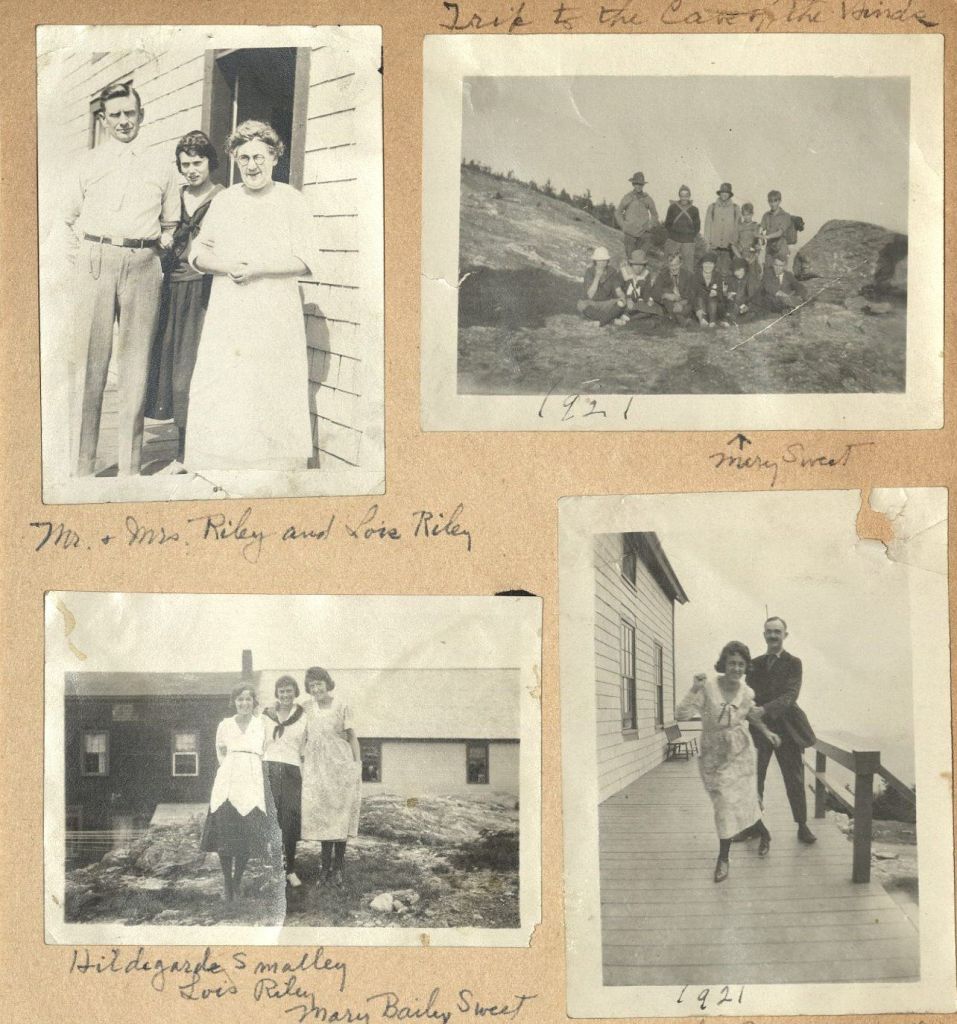
A portion of a page devoted to photos of Mary Sweet and friends at the Summit House in 1921. Sweet worked as assistant manager and hostess for the Mt. Mansfield Company from 1949-1957.
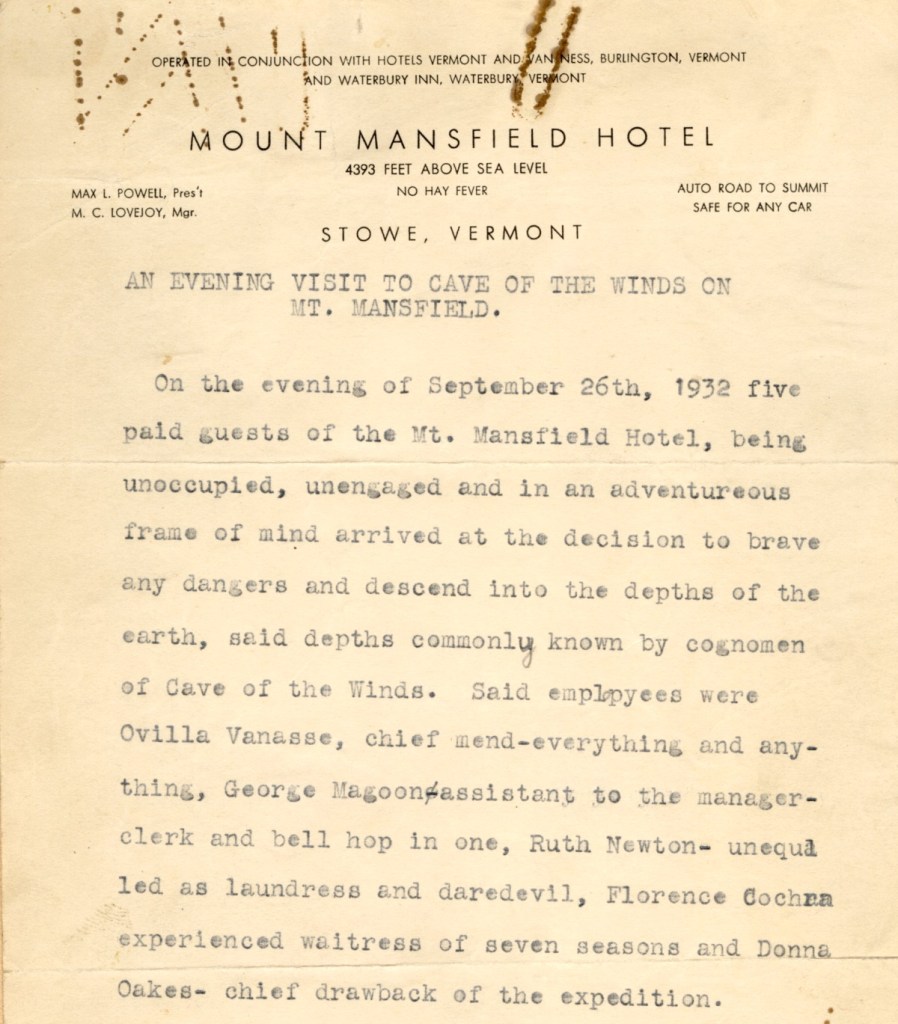
The scrapbook contains several first-person stories about visiting one of the mountain’s unique attractions, the Cave of the Winds, including a humorous account that involved five hotel employees in 1932. “The eventful trip,” they wrote, “is the first to be made at night as far as the record shows and will be long remembered and talked of.” They made sure to record the challenges they faced in the cave, such as descending over a 25-foot ice slide “in sitting position.”
The exploits of Summit House employees who made an evening expedition to the Cave of the Winds are recorded on hotel stationery. The letterhead highlights the healthful conditions (no hay fever at 4393 feet above safe level) and the easy access (auto road to summit safe for any car.)
One intriguing group of documents suggest that some visitors actively studied the mountain environment. There are lists of birds and plants of Mount Mansfield, undated and dated (1870, 1928, 1935) that include information about type of bird or plant and its location on the mountain. One handwritten list, “Plants of Mt. Washington observed on Mt. Mansfield,” suggests a scientific investigation.
“Save for record for Mt. Mansfield’s Summit House centennial celebration” is scrawled across a brown envelope holding 8 x 10 black and white photos. The Summit House hosted a centennial celebration in July 1958 attended by 1,200 people (including Mary Sweet, featured in the photo above). Perhaps the scrapbook was set out during the festivities.


![Color image of an old volume open to a page that says, "Washington Band Book Shelburn [sic] Vt"](https://vtarchivesmonth.org/wp-content/uploads/2025/10/picture4.png?w=624)
![Image of a typed record that says, "Interview with Kitty Noonan 11/22/81
On the history of Shelburne Falls.
Miss Quinlan Picked out photographs from an old photograph album we found in our attic. Following are the people she knew:
Frederick A. Basford and Family had a wagon shop at the Falls i 1869.
A.K. Moore who ran the Grist Mill at Shelburne Falls. He died around 1989 from an accident at the Grist Mill. The mill was down behind Barbara Kent's house.
John Papineau lived in the Oak's House. Another family lived across the street (Henry Papineau. John was the father.
Mrs. Papineau was a Sorrell. Her father lived to be 100 years old.
View of the 1927 Flood. Back view of the Grist Mill at Shelburne Falls when both dams on the river were washed out.
The people in the picture are Evert Laroque, Clayton Shortsleeves, Jr. and his wife Hazel. This is a view of the front of the Grist Mill.
The stones from the Grist Mill were used to build the Vermont House at Shelburne Museum.
Map of Shelburne Falls in 1900 drawn from an inset of the 1869 Shelburne map by Tom Tompkins, Cub Scout in the 1960's as a project on town history. He visited the neighbors in the Shelburne Falls from Mt. Philo Road to just over the Falls bridge. He also drew another map of the people living on the street in the 1960's.
For 1900: Begining [sic] at the bridge and going East, the first house on the left is where Mrs. Sorrell lived. Then the..."](https://vtarchivesmonth.org/wp-content/uploads/2025/10/picture6-1.png?w=624)





 Vermont Archives Month