We are now moving on to Tessa and her work at WHS, inventorying and arranging historic records. Learn about her process and key takeaways.
This past winter and spring I had the opportunity to intern with the Vermont Historic Records Program (VHRP) and complete a collections project at the Williston Historical Society (WHS). After a wonderful experience interning through this program at the Ethan Allen Homestead Museum in 2025, I was excited to begin another internship where I could get hands-on experience in the archival world.
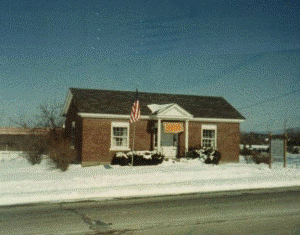
During my initial meeting with Jane Cadwalader from VHRP and Adriene Katz and Aron Merrill from the Williston Historical Society, I was given a tour of the beautiful Dorothy Alling Memorial Library, and the Vermont Room where the WHS collections are stored. We spent some time as a group discussing the project and what the priorities were since I had one hundred hours to complete the project based on the available funding.
The most urgent priority was the collections closet in the Vermont Room, which had become crowded over time. My goal for this project was to create a better organizational system of identifying which collections were housed in the closet and then documenting where they were located in order to make the collections more accessible. There were also boxes on the floor that needed to be moved up onto shelves to better protect them in case of any environmental hazards like flooding.
My first step was labeling each side of the closet as well as the shelves and drawers. As I went through the collections, I inventoried shelf by shelf, and didn’t relocate anything until much later on in the process. As I examined each collection, I entered data about them into a spreadsheet, including a general description of the collection, the type of archival records present (e.g. photographs, letters, journals, scrapbooks, negatives etc.), any available accession information, the physical size of the collection, and the date range.
Before beginning the inventory process, I was instructed about proper procedure when handling archival materials and how to identify condition issues such as improper storage, tears, mold, residue, and insect damage. Luckily most condition issues were minor, but learning about this helped me feel more comfortable when I did encounter issues. In the spreadsheet I highlighted items with condition issues that were high priority to make it easier to focus on collections that needed the most attention.
While inventorying the collections, I often encountered items that hadn’t been accessioned yet. I designated an area as a temporary “loading dock” for these items in order to make it easier for Adriene and Aron to identify them later.
Once I had inventoried all of the collections in the closet, I organized them and relocated some so that similar collections were housed together. I created an audiovisual section for photo and audio collections, and a news section for the newspaper and newsletter collections. During this process physical accessibility was often on my mind, and I focused on moving the lighter collections to higher shelves and the heavier collections to lower shelves. I also consolidated noncollection items such as WHS’s supplies, handouts, and equipment into two drawers.
After finishing this project, I had more hours available, which led to Adriene and Jane devising a smaller project to take inventory of the Vermont Room’s framed works. This included mounted works and framed items propped on shelves around the room. As with the closet, I measured each framed item and added information about it into a spreadsheet. I examined each item for condition issues and highlighted any I felt were high priority.
Lastly, as I inventoried both the closet and the framed works around the Vermont Room I created a short list of exhibit ideas and WHS materials that matched these themes and could serve as display materials in future exhibits. Due to time constraints this document is not comprehensive of all the potentially relevant collections, however it provides a starting point for creating these types of exhibits based on a selection of the archival items housed at the Williston Historical Society.
During this process of diving into the past, I frequently found myself thinking about the future. Will this system make sense to someone looking only at this spreadsheet? Is this organizational system conducive to research? How can I arrange these collections to be the most physically accessible? What items are alike and should be grouped together? As I went through these collections, it was fascinating to see what kinds of things people had felt were worth preserving, and the immense care that went into this.
Working on projects such as this one have transformed how I think of collections work, and historic preservation as a whole. As many in this field know, this kind of work often feels like sand slipping through your fingers, as there is always more to do and more to improve upon. It can feel neverending, and yet, it is so rewarding to see the transformation a collection can undergo! As many wonderful people have taught me, the goal is to leave a project in a better state than when you found it, and I feel confident that this project will allow WHS to move forward with more ease and efficiency.
I am very grateful for the support from the VHRP and WHS staff who worked with me to see this project through. Having the opportunity to organize and inventory such a variety of materials in a short period of time transformed the way I think about conserving collections. Months later, the skills I gained through this internship have informed my role as a Collections Assistant at the Lake Champlain Maritime Museum, where I have been cataloging a variety of collection items. Similar to my internship, my current work involves documenting what types of records are present, evaluating items for condition issues, and identifying commonalities between collections items. Rachel and Jane from VHRP have continued to be a valuable resource to consult on archival collections, and have been instrumental in my knowledge of archival methods and best practices.


